
Service pages with a purpose
Give your main services space to explain what is included, who the work is for, common questions, and how to request it. Build around the services you actually want to sell.
Small Business Websites
Custom websites for local and service businesses that need customers to understand the work, check the service area, and call, book, or request a quote. Work directly with Ryan on the design, build, and launch.
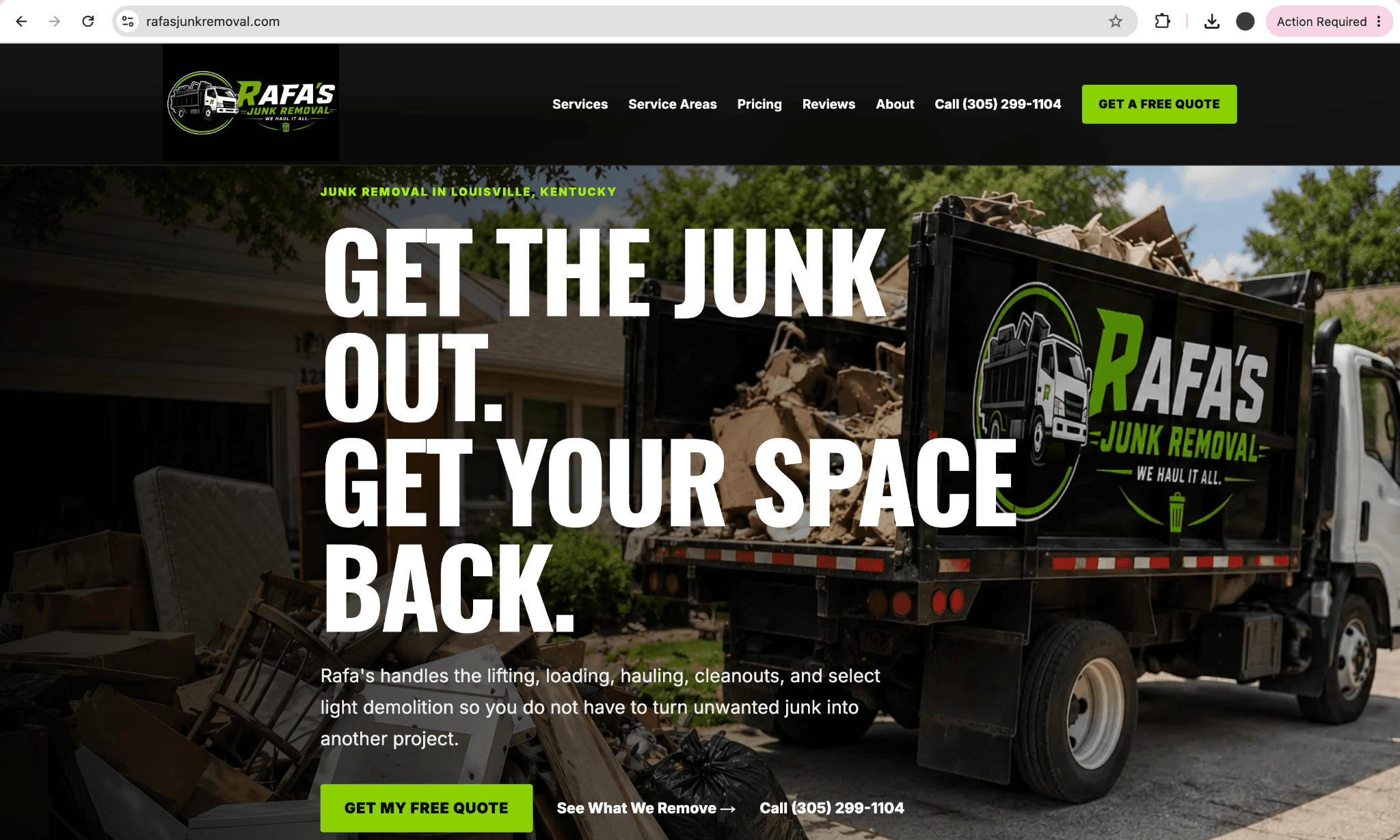
Small business project
The site combines a focused customer journey with deeper service, location, item, cleanout, pricing, review, project, and quote pages for the jobs the company actually performs.
Do you provide the service I need? Do you work in my area? Can I trust you? What does it cost? How do I get started?
For Rafa’s, that meant separating service information, coverage, pricing context, and quote requests instead of asking the homepage to explain everything. Your site’s structure should reflect how your own customers choose a provider.
Give your main services space to explain what is included, who the work is for, common questions, and how to request it. Build around the services you actually want to sell.
Make the primary contact option easy to use on a phone. Agree on the information your form needs, where the inquiry goes, and how your team follows up.
Use your project photos, customer feedback, business details, and team information. A visitor should be able to see the actual company behind the website.
Check mobile layouts, contact forms, page titles, canonical URLs, redirects, and sitemap entries. Agree on analytics so later decisions can use visits and inquiries, not guesses.
A focused local business may need a handful of strong pages. A service company with several jobs or markets may need more depth. The structure should follow the business, not a page quota.
Accurate services, hours, location details, reviews, and contact information matter more than a flashy homepage.
Calls, quotes, estimates, bookings, and consultations need a clear path from the page to the next action.
A brochure site often stops being enough once the team needs better tracking, more service depth, or connected systems.
A redesign should keep useful URLs, content, analytics, and search value instead of throwing everything away.
Customers understand the offer. Services, coverage, and expectations are easy to find.
You learn more from inquiries. Forms and analytics preserve enough context to see what is actually producing useful leads.
The site can grow without becoming repetitive. New pages get added when the business or the data gives us a reason.
A local business does not need the same website as a company with several services and markets. We agree on the content, design, features, and launch work before quoting.
Discuss your existing website, audience, content, and priorities with the person designing and building the project. The page list follows that conversation.
The agreed scope identifies the pages, content responsibilities, features, revisions, and launch work. Account access, ongoing costs, and handoff are settled before development.
Content management and ongoing support are scoped to how you expect to use the site. New features and substantial changes are separate work, rather than hidden in a maintenance promise.
Send your current website, the services you want to promote, and what is getting in the way. Rambler will scope the work and provide a firm quote before development.
Discuss your business website ↗